Journals from
the Field
Discover firsthand stories, insights, and reflections from the heart of rural Jharkhand and Bihar. Through the voices of our team, community partners, and beneficiaries, we share the challenges, triumphs, and everyday moments that shape our journey toward sustainable change.
FEATURED STORY
Each journal entry brings you closer to the impact of Better World Foundation’s work.

Balancing the Sparkle: Energy, Equity and the Future of Mica
by Manoj Prabhakar (Director, Better World Foundation)
Mica as a mineral is not just about shimmer and visual allure but holds immense potential to enhance livelihoods and capture the global market where India is a major contributor in its exports mainly in its raw form. The lack of updated government data on mica mining underscores a broader issue of invisibility in the sector.
 Every story shared brings us one step closer to understanding the real impact of our work in rural communities.
— Field Coordinator, Ranchi

Community Voice
November 11, 2025
Aman Munda – A Father’s Resolve and a Child’s Revival
by admin
In a scattered hamlet of Khunti, Aman Munda’s weak frame signalled a deeper nutritional crisis. His father, a farm labourer, simply didn’t know better — starch-heavy meals and infrequent health visits were the norm.
Community VoiceNov 11th, 2025Aman Munda – A Father’s Resolve and a Child’s Revival

In a scattered hamlet of Khunti, Aman Munda’s weak frame signalled a deeper nutritional crisis. His father, a farm labourer, simply didn’t know better — starch-heavy meals and infrequent health visits were the norm.
Through regular home visits, nutrition counselling, dietary support, and linkage with the Nutrition Garden Kit initiative, Aman’s family slowly adopted healthier habits.
Months later, Aman became unrecognizable — active, energetic, and finally able to play without tiring.
His father now tells neighbours, “Thinness is not normal — health grows when you nurture it.”
Aman’s journey shows how preventive care and community awareness can transform an entire household.Community Voice,Research
November 11, 2025
Jagdishpur Village – Machines That Built Collective Strength
by admin
In Jagdishpur, long hours of manual labour once defined farming. Through MVDP, villagers formed the Aadarsh Krishak Hit Samuh and created a Machine Bank stocked with threshers, sprayers, weeders, and wheel hoes.
Community VoiceNov 11th, 2025Jagdishpur Village – Machines That Built Collective Strength
In Jagdishpur, long hours of manual labour once defined farming. Through MVDP, villagers formed the Aadarsh Krishak Hit Samuh and created a Machine Bank stocked with threshers, sprayers, weeders, and wheel hoes.
The results were immediate:
• 30–40% reduction in labour costs
• Timely farm operations
• Reduced drudgery
• Higher net income
“These machines don’t just work faster — they make us stronger together.”
The Machine Bank is now a model of collective ownership and rural self-reliance.Community Voice
October 17, 2025
Training & Capacity Building for Local Leaders
by admin
We design and adapt solutions with community voices and partner expertise, ensuring every program reflects local realities and aspirations.
Community VoiceDec 10th, 2024Training & Capacity Building for Local Leaders
As we continue this work, we remain committed to amplifying community voices and ensuring that development is driven by those who know their needs best. This isn’t just about implementing programs – it’s about co-creating solutions that last.
The journey continues, and we invite you to be part of it. Together, we’re building healthier, self-reliant communities, one step at a time.
As we continue this work, we remain committed to amplifying community voices and ensuring that development is driven by those who know their needs best. This isn’t just about implementing programs – it’s about co-creating solutions that last.
This section now automatically adjusts — if the text becomes too long, it will move below the image without breaking the layout.
A Time-Tested, Eco-Friendly Solution: Daatun
As we continue this work, we remain committed to amplifying community voices and ensuring that development is driven by those who know their needs best. This isn’t just about implementing programs – it’s about co-creating solutions that last.
The journey continues, and we invite you to be part of it. Together, we’re building healthier, self-reliant communities, one step at a time.
As we continue this work, we remain committed to amplifying community voices and ensuring that development is driven by those who know their needs best. This isn’t just about implementing programs – it’s about co-creating solutions that last.
The journey continues, and we invite you to be part of it. Together, we’re building healthier, self-reliant communities, one step at a time
We deliver practical support, training, and resources that empower local leaders, institutions, and changemakers across rural Bihar and Jharkhand. In the heart of rural Jharkhand and Bihar, communities are rediscovering ancient wisdom and traditional practices that offer sustainable solutions to modern challenges. This story takes you on a journey through villages where time-tested methods are being revived and celebrated.
We deliver practical support, training, and resources that empower local leaders, institutions, and changemakers across rural Bihar and Jharkhand.
Watch: Community Voices
Building Sustainable Futures
Through collaborative efforts with community partners, we’ve developed programs that respect local knowledge while introducing innovative approaches. The results speak for themselves – healthier communities, preserved ecosystems, and stronger social bonds.
Every story shared brings us one step closer to understanding the real impact of our work in rural communities.
The voices of those we serve guide everything we do.
As we continue this work, we remain committed to amplifying community voices and ensuring that development is driven by those who know their needs best. This isn’t just about implementing programs – it’s about co-creating solutions that last.
The journey continues, and we invite you to be part of it. Together, we’re building healthier, self-reliant communities, one step at a time.
As we continue this work, we remain committed to amplifying community voices and ensuring that development is driven by those who know their needs best. Together, we’re building healthier, self-reliant rural communities.
Traditional Practices
Sustainability
Rural Development
Balancing the Sparkle: Energy, Equity and the Future of Mica
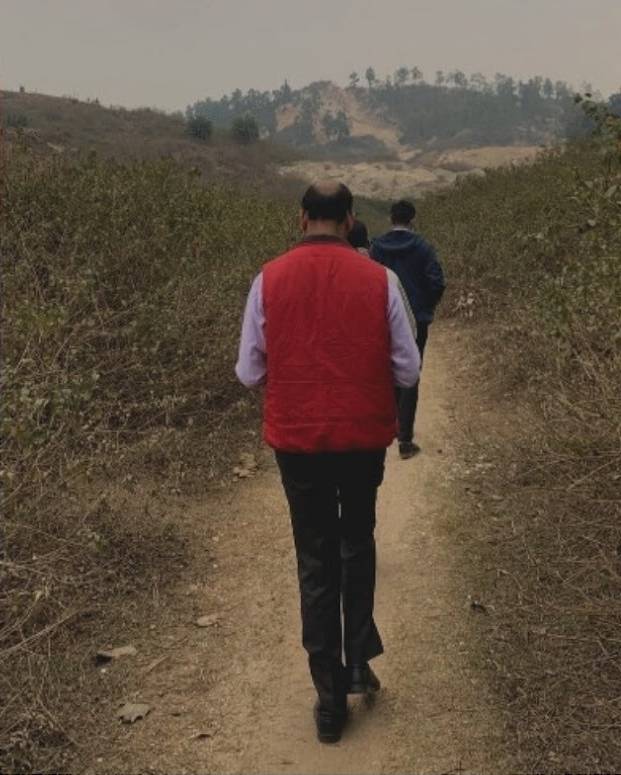
Introduction and background of Mica Mining in India
Mica as a mineral is not just about shimmer and visual allure but holds immense potential to enhance livelihoods and capture the global market where India is a major contributor in its exports mainly in its raw form. The lack of updated government data on mica mining underscores a broader issue of invisibility in the sector. As per the Jharkhand State Mineral Development Corporation, the possible mica deposits were at 13,544 tonnes as on the year 1995 (Jharkhand State Mineral Development Corporation Limited, n.d.). It must be noted that the most recent government statistics on mica mining and trade in Jharkhand remain outdated. In the absence of updated datasets, this paper relies on existing government records and secondary literature. While this may not capture recent shifts in the sector, it provides the only available baseline for analysis.
Human Realities of Mica Mining
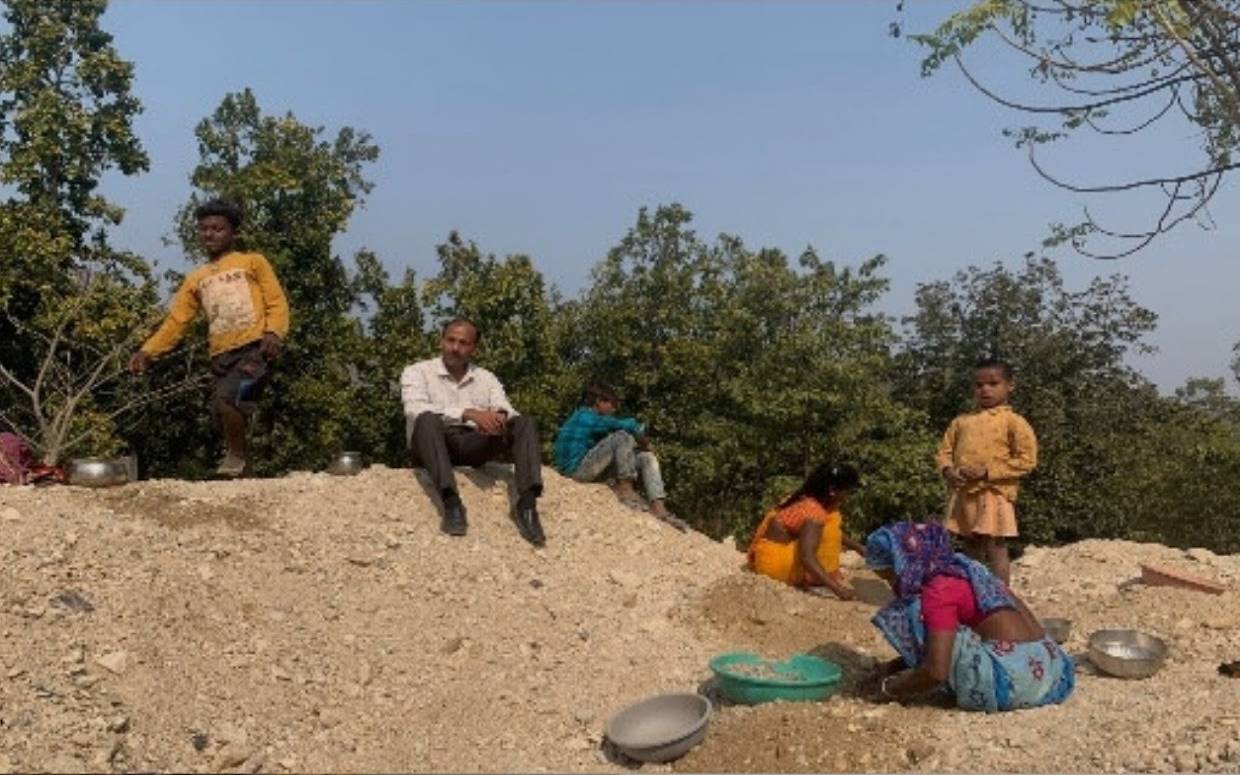
The human realities of mica mining reflect overlapping layers of vulnerability and exploitation. In many villages, people collect mica from abandoned mines in forested areas, earning very low wages because there are no other livelihood options (Verma, 2023). Generational poverty pushes children into mica work, keeping them out of school and trapping families in a cycle of hardship. (United Nations Development Program Report, 2021).Women’s contributions remain undervalued as social norms and household responsibilities limit their role in mining, despite their heavy involvement (Doris Buss, 2019). On top of this, mica extraction is unsafe: workers face serious health risks such as pneumoconiosis, as mica dust itself can damage the lungs even without other hazards (Moitra, 2018). These combined realities show that mica mining is less a choice and more a dangerous necessity for survival.
Contemporary Discourse
Mica provides an outstanding combination of chemical, physical, electrical, thermal and mechanical properties which cannot found in any other insulating product. Mica has been valued for its commercial use be it in electronic industry, construction, automobiles, cosmetics, industrial use or even Specialized applications for sheet mica are found in aerospace components in air-, ground-, and sea-launched missile systems, laser devices, medical electronics and radar systems (About Mica, n.d.). The question has always been surrounding the ethical sourcing of mica and the allied shadow economy (Gupta, 2024) surrounding it.Experts estimate about 70 percent of mica production in India is from illegal mining in forests and abandoned mines. In 2013/14 India only had 38 reporting mica mines, according to India’s Bureau of Mines. But renewed interest in mica from China’s economic boom and a global craze for “natural” cosmetics has sent illegal operators scurrying to access the hundreds of closed mines in India and created a lucrative black market (Nita Bhalla, 2016).
In the year 2016 The Guardian Published a report (Paddison, 2016)focussing on the challenges faced by some of the biggest cosmetic brands around the globe including L’Oréal and Estée Lauder, as well as suppliers such as Merck in ethically sourcing mica from India. The issues surrounding Mica Mining that were dormant for several years gained considerable visibility when IANS (Indo Asian News Service) published their report titled “Rihanna Fenty, Fenty Beauty and Blood Mica in India” in the year 2021 accusing popular pop star Rihanna owned cosmetic brand Fenty Beauty of sourcing mica from mines in Jharkhand which use child labour.
Some International Frameworks for Ethical Mining Compliance
The US Dodd–Frank Act, 2010, requires companies to use auditors when reporting on minerals from conflict zones. Ethical auditing is also an important feature of recent transnational regulation, including the EU Directive 2014/95 on Disclosure of Non-Financial and Diversity Information and Organisation for Economic Co-operation and Development Due Diligence Guidance for Responsible Supply Chains of Minerals from Conflict-Affected and High-Risk Areas. As governments and civil society actors encourage auditing, the audit regime has become widely regarded as a legitimate mechanism to enforce labor and environmental standards in global supply chains (LeBaron, 2017).
In 2011, the United Nations Human Rights Council unanimously endorsed the UN Guiding Principles on Business and Human Rights (UNGPs). The UNGPs are the world’s most authoritative, normative framework guiding responsible business conduct and addressing human rights abuses in business operations and global supply chains. The UNGPs constitute a global standard against which the conduct of both States and companies can be assessed. Comprising 31 principles, the UNGPs are organized under 3 pillars—Protect- Governments must protect people’s rights by setting clear rules for businesses through strong laws, policies, and enforcement., Respect- Businesses must avoid harming human rights by adopting clear commitments, carrying out ongoing checks (due diligence), and fixing problems when they cause harm and Remedy- When rights are violated, people must have fair and effective ways to seek justice. Both governments and businesses should provide grievance systems that are fair, accessible, and built on genuine dialogue with affected communities (UN Guiding Principles on Business and Human Rights , n.d.)
The 1st of January 2021 marked the entry into force of the European Regulation on Responsible Sourcing of Tin, Tungsten, Tantalum and Gold (3TG) from conflict-affected and high-risk areas (EU CMR or Regulation). The objective of the Regulation is to oblige European companies to carry out due diligence checks on their suppliers up-to the middle of the supply chain in order to minimize and manage the risks of human rights abuse and to break the link between the exploitation of mineral resources and violent conflict (European Regulation on Responsible Mineral Sourcing, 2021)
Across Europe and the United States, several regulations govern ethical mining practices. In contrast, India lacks such stringent frameworks, creating a conducive environment for shadow economies to thrive and leaving local communities at the periphery, forced to endure the exploitative consequences of illegal mica mining that ripple through the entire supply chain.
Policy intervention and its Challenges
The challenges faced by marginalised dhibra pickers have been raised multiple times in Parliament by elected representatives, urging both the central and state governments to take necessary measures to safeguard their livelihoods. Over the years, the dhibra pickers themselves have also voiced their concerns about the hardships of sustaining their income from mica collection. While these appeals have occasionally stirred temporary political attention and prompted calls for action, they have yet to translate into sustained, concrete policy measures that can secure their future.
However, on February 2022, the Government of Jharkhand had empowered JSMDC (Jharkhand State Mineral Development Corporation Ltd.) to regulate and boost mica mining, trade and community welfare under the purview of Dhibra Policy as an initial move towards legalizing artisanal mica mining in the state. The policy emphasized “cleaning up” the mica supply chain by ensuring safe working conditions, eliminating child labour, setting a minimum standard price for mica, and establishing workers’ cooperatives. These cooperatives would empower miners to organize, oversee, and conduct mica collection in line with codified labour welfare standards and internationally recognized environmental regulations. Owing to some unforeseen circumstances the said policy did not bear fruition and the fate of the community members including the dhibra pickers hangs in balance till this date.
Transition of Mica from minor to major mineral and its implications
Mica in India transitioned from a major mineral to minor mineral in 2015, a change that has recently been reversed. It was declared a minor mineral by the Ministry of Mines in February 2015 to empower states to manage its production, but then reclassified back to a major mineral in February 2025 under the National Critical Mineral Mission to boost exploration and mining of the critical minerals it contains, such as lithium and beryllium. This change allows for longer lease periods and greater regulation by the Indian Bureau of Mines (IBM), aiming to increase scientific mining and critical mineral recovery. Mining lease in respect of these minerals would now be regulated in accordance with the provisions of The Mines and Minerals (Development and Regulation) Act, 1957 and the rules made thereunder as applicable to other major minerals. (Ministry of Mines classifies Barytes, Felspar, Mica and Quartz as Major Minerals, 2025) (Indian Minerals Yearbook 2022 ,Minor Minerals Mica, 2022).
A major policy complication stems from the reinstatement of mica as a “major mineral.” On paper, this brings stricter oversight under central regulation. In practice, however, mica continues to be handled like a minor mineral at the state and local level. The result is policy ambiguity—an unclear regulatory framework that lacks clarity and prevents the creation of a formalised, accountable supply chain, leaving communities vulnerable and invisible. The next step from the Central Government is unknown but the state created policy like the Dhibra Policy will become obsolete.
Balancing Energy Security and Human Security: Who Speaks for the Mica Pickers
The Government of India is prioritising domestic lithium exploration, including the potential extraction of lithium from mica reserves, to reduce dependence on imports (Import of Critical Minerals for EVs, 2025)—particularly from China. The decision to reclassify mica from a minor to a major mineral marks an important step in this direction. Looking ahead, one possibility is the large-scale extraction of mica reserves by either government agencies or private corporations, aimed at strengthening India’s self-sufficiency and reducing its reliance on imports. The rapid growth in demand for lithium-ion batteries, especially for electric vehicles (EVs), is a key driver of this policy push, as India works towards meeting its EV adoption targets and enhancing its energy security.
Mica itself has immense value across industries and should not merely be treated as a byproduct of lithium extraction. This underscores the urgent need for a legalised and well-regulated mica mining framework that can unlock its benefits responsibly and equitably. Harnessing mica to its full potential could contribute significantly to India’s long-term self-sufficiency—but only if communities are placed at the centre of the process.
Here lies the provocation: Can the proposition of energy security come at the cost of human security?
We have to apprise ourselves with the question as to what will become of the local mica pickers whose livelihoods currently depend on this mineral? As policies shift towards large-scale extraction, will they be integrated into the evolving value chain, or will they once again be pushed further to the margins? For decades, these communities have survived at the periphery of power, invisible yet indispensable. They now stand like small pieces of a much larger jigsaw puzzle—struggling to find their place in the shifting dynamics of extraction.
The legalisation of mica mining will not necessarily ensure an upliftment in the livelihood of the local communities as there are several lessons to be learnt from the problems faced by the informal workers working in the coal sector in Jharkhand who have been facing constant economic vulnerability despite being a part of a legalised framework of coal mining (Nayak, 2023)
The true test of India’s mica mining policy will not be measured by reduced import dependence alone, but by whether it can ensure dignity, security, and participation for the mica picking communities. This is the challenge before policymakers, academicians, civil society organisations, industry leaders, and the communities themselves: to speak for and with the mica pickers, to design a framework that balances national ambitions with human rights, and to ensure that the local community members are not buried in the debris of mica mining.