Discover
What We Do
We integrate policy advisory, programme implementation, institutional capacity building, and knowledge management to bridge the gap between evidence and action. Our methodology is iterative: research informs pilots, pilots inform programmes, and programmes scale into policies.
OUR SERVICES
Explore the different services provided by our foundation through a glance at our projects.
Rural Healthcare
Our Rural Healthcare initiatives bring accessible, equitable, and quality medical care to underserved communities through its flagship models delivering mobile maternal and child health care services, including nutrition counselling.
“Health on Wheels” and “Nutrition on Wheels”. While HoW operates through CSR support, NoW is funded by the Government, and together, they bring a rich and diverse implementation experience. The program also provides preventive care, growth monitoring, and anaemia screening, directly to remote villages where access is limited.
Read More
Health Equity
Care For All
Rural Healthcare
Health Equity
Care For All
Health on Wheels
A mobile healthcare program delivering maternal, child, and adolescent care to remote tribal villages through doorstep services, nutrition support, community engagement, and frontline worker strengthening.
Health on Wheels
Program Overview
Health on Wheels is a mobile, community-centered healthcare initiative designed to bring essential maternal,
child, and adolescent healthcare to the remote tribal villages of Khunti district. The program delivers
doorstep medical care, nutritional support, growth monitoring, and behavior change interventions to communities
that remain beyond the reach of fixed healthcare facilities.The aim is to ensure that every mother, child, and family receives timely, continuous, and culturally grounded
care through mobile health vans, frontline worker engagement, and deep community participation.Key Objectives
- Improve access to quality maternal, newborn, child, and adolescent healthcare in remote villages
- Strengthen nutrition practices through screenings, growth monitoring, counselling, and nutrition kit distribution
- Identify and manage high-risk pregnancies and malnourished children at an early stage
- Promote institutional deliveries and awareness of schemes like Janani Suraksha Yojana
- Improve nutritional status of children aged 0–6 and prevent relapse
- Strengthen IYCN indicators through breastfeeding & complementary feeding awareness
- Reduce low-birth-weight cases through improved protein intake and monitoring
- Track and support low-birth-weight babies to reduce infant mortality
- Build capacity of FLWs in growth monitoring, IYCF, anemia detection, and counselling
- Promote sustainable nutrition through Poshan Vatikas and model nutrition gardens
- Support long-term recovery through home visits, digital tracking, and follow-up
- Strengthen community engagement through culturally aligned outreach & local leadership
Our Approach
Health on Wheels follows an integrated model that combines doorstep healthcare, nutrition support, behavior change,
and livelihood-oriented nutrition solutions. Our approach includes:- Mobile health vans delivering antenatal, postnatal, pediatric, and general medical services
- Regular anthropometry, growth monitoring, and personalized nutrition counselling
- Transport support and doctor accompaniment for high-risk pregnancy cases
- Distribution of nutrition kits containing eggs, lentils, and seed packets
- Home visits, follow-ups, and digital beneficiary tracking
- Capacity building of frontline workers for long-term continuity
- Cultural engagement through Godbharai, Annaprashan, recipe contests & adolescent health sessions
- Expansion into Pathal Gadi villages through trust-based community-first engagement
Impact & Outcomes
Expanding Access
- 50,000+ individuals reached across 309 villages
- Khunti: 144 villages | Murhu: 127 villages | Arki: 38 villages
- 272 health camps conducted — Khunti: 95 | Murhu: 140 | Arki: 37
- 537 mobile outreach trips conducted in 2 years
- Large-scale doorstep medical services, diagnostics, follow-ups & counselling
- Successful outreach in Pathal Gadi areas through trust-building
Quantitative Reach
2023–24
- Lives Touched: 108,572
- Malnourished Children Reached: 1311
- Pregnant & Lactating Women: 1015
- Children under Nutrition & Sanitation: 3369
- Total Beneficiaries: 5695
2024–25
- Lives Touched: 112,384
- Malnourished Children Reached: 701
- Pregnant & Lactating Women: 996
- Children under Nutrition & Sanitation: 7106
- Total Beneficiaries: 8803
2025–26 (Till Sep 2025)
- Lives Touched: 29,543
- Malnourished Children Reached: 124
- Pregnant & Lactating Women: 255
- Children under Nutrition & Sanitation: 2147
- Total Beneficiaries: 2526
Health Outcomes
- 8446 anthropometric screenings conducted
- 687 SUW and 1738 MUW children recovered through therapy
- Significant 15-day weight gain improvements tracked
- 611 frontline workers trained (50% Knowledge Index increase)
- Improved maternal nutrition & supplement adherence
- Previously unregistered pregnant women brought under care networks
Integrated Nutrition + Livelihood Model
- 59 Poshan Vatikas established in homes & Anganwadi Centres
- Surplus vegetable production improving household income
- Eggs, lentils & seed kits regularly distributed to support dietary diversity
- Community-led events strengthening participation & behaviour change
Maternal Health Strengthening
- Personalized counselling on hygiene, nutrition & newborn care
- Early identification and tracking of high-risk pregnancies
- Doctor home visits for remote hamlets
- Continuous postnatal care for safe recovery
- Successful engagement in socially sensitive Pathal Gadi villages
Implementation Partners
Health on Wheels operates through a multi-stakeholder ecosystem that ensures seamless service delivery, strong
governance, and sustained community engagement.Core Partners
- Better World Foundation: Program design, implementation, monitoring, community outreach, FLW capacity building
- Glenmark Foundation: Funding, technical guidance, nutrition innovations
- District Administration, Khunti: Governance support, convergence, outreach permissions
- District Health Department, Khunti: Medical supervision, referrals, risk-case management
- ICDS Department: FLW coordination, growth monitoring, community nutrition outreach
Looking Forward
- Establishing more village-level nutrition gardens for food autonomy
- Strengthening FLW capacity for independent community-led care
- Enhancing digital tracking for improved recovery cycles
- Introducing tailored interventions for adolescents & high-risk families
- Expanding outreach to unreached hamlets for full inclusion
- Building stronger community ownership to prevent relapse
Health on Wheels is evolving into a scalable, community-driven model delivering lasting improvements in maternal and
child health across rural Jharkhand.Other Initiatives
- Nutrition on Wheels – Jharkhand
- Nutrition & Health (2021–Ongoing)
- Covid Assistance – Jamui, Bihar (2020–2021)
- Shraddha Program for Migrants (2020–2021)

Nutrition on Wheels – Jharkhand
A mobile nutrition initiative delivering screenings, counselling, supplementation, and 15-day camps to reduce child malnutrition and support pregnant, anaemic, and high-risk women in rural Jharkhand.
Nutrition on Wheels
Program Overview
Health on Wheels is a mobile, community-centered healthcare initiative designed to bring essential maternal,
child, and adolescent healthcare to the remote tribal villages of Khunti district. The program delivers
doorstep medical care, nutritional support, growth monitoring, and behavior change interventions to communities
that remain beyond the reach of fixed healthcare facilities.The aim is to ensure that every mother, child, and family receives timely, continuous, and culturally grounded
care through mobile health vans, frontline worker engagement, and deep community participation.Key Objectives
- Improve access to quality maternal, newborn, child, and adolescent healthcare in remote villages
- Strengthen nutrition practices through screenings, growth monitoring, counselling, and nutrition kit distribution
- Identify and manage high-risk pregnancies and malnourished children at an early stage
- Promote institutional deliveries and awareness of schemes like Janani Suraksha Yojana
- Improve nutritional status of children aged 0–6 and prevent relapse
- Strengthen IYCN indicators through breastfeeding & complementary feeding awareness
- Reduce low-birth-weight cases through improved protein intake and monitoring
- Track and support low-birth-weight babies to reduce infant mortality
- Build capacity of FLWs in growth monitoring, IYCF, anemia detection, and counselling
- Promote sustainable nutrition through Poshan Vatikas and model nutrition gardens
- Support long-term recovery through home visits, digital tracking, and follow-up
- Strengthen community engagement through culturally aligned outreach & local leadership
Our Approach
Health on Wheels follows an integrated model that combines doorstep healthcare, nutrition support, behavior change,
and livelihood-oriented nutrition solutions. Our approach includes:- Mobile health vans delivering antenatal, postnatal, pediatric, and general medical services
- Regular anthropometry, growth monitoring, and personalized nutrition counselling
- Transport support and doctor accompaniment for high-risk pregnancy cases
- Distribution of nutrition kits containing eggs, lentils, and seed packets
- Home visits, follow-ups, and digital beneficiary tracking
- Capacity building of frontline workers for long-term continuity
- Cultural engagement through Godbharai, Annaprashan, recipe contests & adolescent health sessions
- Expansion into Pathal Gadi villages through trust-based community-first engagement
Impact & Outcomes
Expanding Access
- 50,000+ individuals reached across 309 villages
- Khunti: 144 villages | Murhu: 127 villages | Arki: 38 villages
- 272 health camps conducted — Khunti: 95 | Murhu: 140 | Arki: 37
- 537 mobile outreach trips conducted in 2 years
- Large-scale doorstep medical services, diagnostics, follow-ups & counselling
- Successful outreach in Pathal Gadi areas through trust-building
Quantitative Reach
2023–24
- Lives Touched: 108,572
- Malnourished Children Reached: 1311
- Pregnant & Lactating Women: 1015
- Children under Nutrition & Sanitation: 3369
- Total Beneficiaries: 5695
2024–25
- Lives Touched: 112,384
- Malnourished Children Reached: 701
- Pregnant & Lactating Women: 996
- Children under Nutrition & Sanitation: 7106
- Total Beneficiaries: 8803
2025–26 (Till Sep 2025)
- Lives Touched: 29,543
- Malnourished Children Reached: 124
- Pregnant & Lactating Women: 255
- Children under Nutrition & Sanitation: 2147
- Total Beneficiaries: 2526
Health Outcomes
- 8446 anthropometric screenings conducted
- 687 SUW and 1738 MUW children recovered through therapy
- Significant 15-day weight gain improvements tracked
- 611 frontline workers trained (50% Knowledge Index increase)
- Improved maternal nutrition & supplement adherence
- Previously unregistered pregnant women brought under care networks
Integrated Nutrition + Livelihood Model
- 59 Poshan Vatikas established in homes & Anganwadi Centres
- Surplus vegetable production improving household income
- Eggs, lentils & seed kits regularly distributed to support dietary diversity
- Community-led events strengthening participation & behaviour change
Maternal Health Strengthening
- Personalized counselling on hygiene, nutrition & newborn care
- Early identification and tracking of high-risk pregnancies
- Doctor home visits for remote hamlets
- Continuous postnatal care for safe recovery
- Successful engagement in socially sensitive Pathal Gadi villages
Implementation Partners
Health on Wheels operates through a multi-stakeholder ecosystem that ensures seamless service delivery, strong
governance, and sustained community engagement.Core Partners
- Better World Foundation: Program design, implementation, monitoring, community outreach, FLW capacity building
- Glenmark Foundation: Funding, technical guidance, nutrition innovations
- District Administration, Khunti: Governance support, convergence, outreach permissions
- District Health Department, Khunti: Medical supervision, referrals, risk-case management
- ICDS Department: FLW coordination, growth monitoring, community nutrition outreach
Looking Forward
- Establishing more village-level nutrition gardens for food autonomy
- Strengthening FLW capacity for independent community-led care
- Enhancing digital tracking for improved recovery cycles
- Introducing tailored interventions for adolescents & high-risk families
- Expanding outreach to unreached hamlets for full inclusion
- Building stronger community ownership to prevent relapse
Health on Wheels is evolving into a scalable, community-driven model delivering lasting improvements in maternal and
child health across rural Jharkhand.Other Initiatives
- Nutrition on Wheels – Jharkhand
- Nutrition & Health (2021–Ongoing)
- Covid Assistance – Jamui, Bihar (2020–2021)
- Shraddha Program for Migrants (2020–2021)
Nutrition Garden Initiative – Jamui (2020–2021)
A household nutrition initiative helping families grow diverse vegetables and herbs, improving dietary diversity, reducing expenses, and supporting income through home-based nutrition gardens in Jamui.
Nutrition Garden Initiative – Jamui (2020-2021)
Program Overview
The Nutrition Garden Initiative promotes household-level food security and dietary diversity by encouraging families to grow vegetables, tubers, leafy greens, and medicinal herbs in their backyards. Better World Foundation supported 400 families across Sikandra and Khaira blocks of Jamui, enabling them to establish home-based nutrition gardens.
These gardens strengthen nutritional intake, reduce household expenses, and generate supplemental income through the sale of surplus produce. Designed especially for families of 5-6 members, the initiative integrates nutrition, livelihood support, and traditional herbal knowledge to improve community health and resilience.
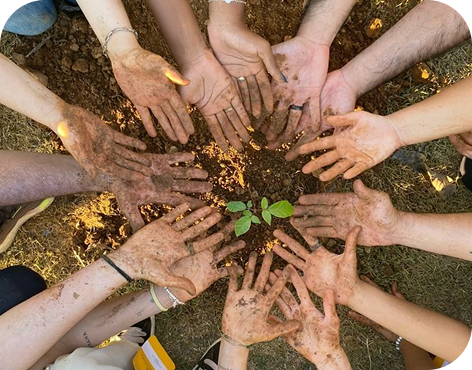
Community Orchard Initiative – Jamui (2020)
A nature-based initiative creating shared community orchards that improve nutrition, boost biodiversity, and strengthen ecological resilience for families in Khaira and Sikandra.
Community Orchard Initiative – Jamui (2020)
Program Overview
Community orchards serve as nature-based solutions that enhance local food availability, biodiversity, and community well-being. Better World Foundation established community orchards in Khaira and Sikandra, reaching 100 families with shared access to fruit trees, nut-bearing species, and berry shrubs.
By creating accessible green spaces that yield fresh produce, the initiative strengthens nutrition, improves ecological resilience, and promotes long-term community ownership over shared natural resources.
Vermi Compost Production by 300 Farmers – Jamui (2020)
A sustainable farming initiative training 300 farmers in vermi composting to improve soil fertility, boost crop nutrition, and create an additional income source.
Vermi Compost Production by 300 Farmers – Jamui (2020)
Program Overview
To support organic farming and nutrient-rich crop production, Better World Foundation trained 300 farmers in Khaira and Sikandra on vermi compost production. Vermi compost improves soil fertility, increases crop yield, and enhances the nutritional quality of produce.
Farmers were trained in preparing vermi beds, managing organic waste, and integrating compost into their farms. Many have adopted vermi composting as an additional income source by selling surplus compost. This initiative strengthens both soil health and household nutrition through sustainable cultivation.
Covid Assistance – Jamui (2020–2021)
Emergency Covid-19 relief providing food, safety support, and essential assistance to stranded migrant workers and vulnerable families in Jamui during the lockdown crisis.
Covid Assistance – Jamui (2020-2021)
Program Overview
During the Covid-19 lockdown, Better World Foundation provided emergency relief to stranded migrant workers and vulnerable households across Jamui. The initiative ensured food security, safety, and support at a time of widespread fear, unemployment, and uncertainty.
All services were delivered while adhering to Covid protocols. Photographs and documentation stand as testimony to the organization’s sustained efforts during one of the most challenging humanitarian crises.
Shraddha Program for Migrants (2020–2021)
A Covid-19 relief initiative providing direct financial assistance to vulnerable migrant families, helping them meet essential needs and regain stability during the crisis.
Shraddha Program for Migrants (2020-2021)
Program Overview
The Shraddha Program was launched to provide direct financial assistance to migrant families severely affected by the Covid-19 pandemic. Many were excluded from formal relief systems and lacked basic resources. The program supported these vulnerable households by providing monetary aid that enabled them to meet essential needs, stabilise their families, and regain dignity during a period of extreme adversity.
Policy Advisory & Advocacy
We actively collaborate with government bodies, multilateral institutions, and civil society to shape inclusive and equitable policies. Through participatory policy development, we strive to influence systems that advance social justice, sustainability, and community well-being.
Our policy advisory work is grounded in rigorous research, economic and legal analysis, and evidence-based planning-addressing structural challenges in agriculture, health, education, and governance. By integrating community voices into policy frameworks, we ensure that development remains people-centric and transformative, not prescriptive.
Read More
Inclusive Development
Policy Advisory & Advocacy
Inclusive Development
Responsible Mica Initiative – Koderma & Giridih, Jharkhand
A community-centric initiative to formalise Jharkhand’s mica supply chain by reducing child labour, improving traceability, empowering households, and ensuring safe, fair, and ethical livelihoods.
Responsible Mica Initiative – Koderma & Giridih, Jharkhand
Program Overview
India’s mica-rich districts of Koderma and Giridih continue to depend heavily on informal mica picking, with nearly 70% of mica entering the market through unregulated and illegal supply chains. This exposes mica pickers—especially women and children—to exploitation, unsafe working conditions, and extremely low wages. Lack of regulation, absence of transparent supply chains, and the dominance of intermediaries further deepen this vulnerability.
To address these systemic issues, Better World Foundation, in collaboration with the Responsible Mica Initiative (RMI)and the Government of Jharkhand, is implementing a holistic, community-centric model to formalise the mica supply chain. The initiative aims to protect mica-dependent households by:
- Strengthening community-based institutions
- Reducing child labour
- Enhancing transparency and traceability
- Implementing policy reforms
- Reducing the influence of exploitative intermediaries
- Ensuring fair value for mica pickers
Through policy advocacy and cross-stakeholder engagement, the initiative is working toward building a responsible, ethical, and legally compliant mica ecosystem, ultimately improving the lives and livelihoods of mica-dependent communities.
Legal Services – Access to Justice for Marginalized Communities
A legal support initiative offering guidance, documentation help, and rights awareness to ensure vulnerable families can access justice and navigate administrative and judicial processes fairly.
Legal Services – Access to Justice for Marginalized Communities
Program Overview
A large segment of India’s population remains unable to access the justice system due to lack of resources, low legal awareness, and fear of formal institutions. Better World Foundation provides legal advisory services to vulnerable families who face discrimination, exploitation, or administrative barriers.
Through this initiative, individuals receive:
- Case-specific legal guidance
- Assistance in understanding rights and laws
- Support in navigating administrative and judicial processes
- Help in preparing documents, applications, and statements
- Empowerment to make informed and legally valid decisions
The program is rooted in the belief that access to justice is a fundamental right. It works to ensure that no one is denied fair treatment simply because they cannot afford legal representation or endure lengthy judicial procedures.
Policy Inputs for Sustainable Agriculture & Climate-Smart Livelihoods
An advisory initiative providing research-based policy inputs and technical support to strengthen government programs on climate-smart agriculture, integrated farming, and sustainable, district-level livelihood planning.
Policy Inputs for Sustainable Agriculture & Climate-Smart Livelihoods
Program Overview
As India transitions toward climate-smart agriculture and integrated farming systems, Better World Foundation provides advisory support and policy inputs to government departments and development partners. These inputs guide the design and implementation of programs such as:
- Integrated Farming Models (IFM / Kisan Pathshalas)
- District-level Livelihood Missions
- Nutrition & Agriculture Convergence Plans
- Sustainable cropping systems and climate adaptation
- Community-led water conservation and soil health planning
Advisory services include technical recommendations, documentation, research-driven planning, capacity building, and field-level pilot demonstrations. These efforts strengthen government policies, ensure evidence-based decisions, and support the scaling of climate-resilient practices across districts.
Advisory & Systems Strengthening for Cooperative Federations (SIDHKOFED)
Advisory support to strengthen Jharkhand’s cooperatives through governance reforms, compliance systems, SOPs, and market-led frameworks that build transparent, farmer-centric institutions.
Advisory & Systems Strengthening for Cooperative Federations (SIDHKOFED)
Program Overview
Under the SIDHKOFED ecosystem, Better World Foundation contributes to policy and institutional strengthening of:
- Primary Cooperatives (MPCS)
- District Unions
- Farmer Producer Organisations (FPOs)
These advisory efforts focus on:
- Governance reforms
- Strengthening cooperative processes
- Rulebook creation & SOP development
- Ensuring compliance with state cooperative regulations
- Advisory support in price-risk management strategies
- Standardisation of procurement protocols
- Market-led development frameworks
By integrating field realities with policy structures, the advisory support under SIDHKOFED helps create robust, transparent, and farmer-centric cooperative institutions across Jharkhand.
Programme Implementation & Management
We provide end-to-end implementation and management services for nonprofits, CSR foundations, and government partners-turning strategy into measurable impact. Our services cover strategic planning, operational oversight, resource mobilization, performance monitoring, and impact assessment.
From programme design to digital engagement and impact reporting, we act as both a strategic advisor and on-ground implementer, alleviating operational burdens and maximizing the social return on investment ensuring every initiative achieves scale, sustainability and desired outcomes.
Read More
Monitoring & Evaluation
Programme Implementation & Management
Monitoring & Evaluation
Samekit Birsa Gram Vikas Yojana – Sah Krishak Pathshala Yojana
A state-led initiative transforming rural livelihoods by developing model Birsa Grams and Krishak Pathshalas that strengthen scientific, integrated, and sustainable farming across Jharkhand.
Samekit Birsa Gram Vikas Yojana – Sah Krishak Pathshala Yojana
Program Overview
Launched by the Government of Jharkhand in 2021, the Samekit Birsa Gram Vikas Yojana – sah Krishak Pathshala Yojana is a flagship initiative designed to transform rural livelihoods and strengthen farming systems across the state. The program focuses on establishing Birsa Grams—model villages developed through the convergence of schemes from Agriculture, Animal Husbandry, Horticulture, Irrigation and allied departments.
Complementing this, Krishak Pathshalas act as local learning hubs, where model farms are developed to promote a “learning by seeing” approach for farmers from clusters of 6–8 Birsa Grams. These centers serve as decentralized knowledge hubs to strengthen scientific agriculture and allied activities at the grassroots.
Key Objectives
- Empower farmers with practical, up-to-date knowledge in modern agriculture, emerging technologies, and value-added practices
- Promote integrated and diversified farming covering crops, horticulture, animal husbandry, and agroforestry
- Encourage eco-friendly and sustainable farming that protects soil, water, and biodiversity
- Enhance farmer incomes through improved yields, market linkages, and financial literacy
Our Approach
Our implementation approach is grounded in systematic planning, community participation, and technology-enabled execution. Work begins with detailed baseline assessments to understand local conditions, followed by site-specific action plans that integrate agriculture, livestock development, and capacity-building support.
Krishak Pathshalas serve as the program’s operational hubs—offering hands-on demonstrations, farmer training sessions, exposure visits, and continuous technical assistance. Progress is tracked through regular field visits, digital monitoring tools, and close coordination with government departments and community institutions.
By combining structured project management with participatory engagement, the initiative ensures that interventions are practical, scalable, and aligned with the long-term vision of resilient and empowered rural communities.
Impact & Outcomes
357+Birsa Grams covered4,500+Farmers trained25,000+Farmer households reachedThe initiative has strengthened rural livelihoods through integrated capacity building, infrastructure development, and improved access to scientific agriculture. Farmers now benefit from quality inputs, improved irrigation, better livestock management, and post-harvest solutions—resulting in higher crop productivity and increased incomes.
Village-level infrastructure such as irrigation systems, livestock units, and collection centers has strengthened value chains and reduced losses. The program has also fostered stronger community participation, greater women’s involvement, and increased farmer collectivization through FPOs—building self-reliant, climate-resilient rural communities.
Farmer Testimonial
“For years, our village struggled with water shortage and high expenses. After the solar boring pump was set up on my fields, everything changed. Now we get water easily without costly diesel, and farmers from nearby villages come to learn from our fields. We feel hopeful about the future of farming
— Farmer, Tamar Block, Ranchi DistrictImplementation Partners
The program is implemented in collaboration with the Agriculture Department, District Agriculture Offices, Implementing Agencies, the Program Management Unit, and agricultural research institutions. These partners bring technical expertise, on-ground experience, and institutional support to translate the program’s vision into measurable outcomes.
Looking Forward
As the program expands, it aims to strengthen the agricultural ecosystem through innovation, capacity building, and wider outreach. The focus includes:
- ➤ Expanding Krishak Pathshalas across more regions to build a widespread network of skilled farmers
- ➤ Advancing research and development to address region-specific challenges
- ➤ Leveraging emerging technologies such as AI, IoT, and precision farming for higher productivity
- ➤ Building strong partnerships with private sector entities to bring innovation and resources into the farming ecosystem
SIDHKOFED – Apex Cooperative Federation for Agricultural & Minor Forest Produce (Jharkhand)
Jharkhand’s apex cooperative federation strengthening producer institutions, improving procurement and value chains, and ensuring fair, transparent, market-linked livelihoods for farmers and forest gatherers.
SIDHKOFED — Apex Cooperative Federation for Agricultural & Minor Forest Produce (Jharkhand)
Organizational Overview
SIDHKOFED is the apex cooperative federation of Jharkhand, responsible for aggregating, strengthening, and marketing agricultural produce and minor forest produce (MFP) collected by farmers and forest gatherers.
Structured as a three-tier cooperative system, the federation operates at the state level, supported by 24 district unionsand a wide network of primary cooperatives (MPCS/PACS/LAMPS) at the panchayat level.District unions focus on improving the governance of member cooperatives, building their capacity, and ensuring procurement, value addition, input access, and market linkages. At the grassroots level, MPCSs mobilize producers, provide quality agricultural inputs, offer credit services, and expand cooperative membership.
Key Mandate
- Act as the apex federation for collection, procurement, aggregation, and marketing of agricultural commodities and MFPs across Jharkhand
- Facilitate market linkages and manage price-risk through timely procurement, transparent grading, and reliable payment systems
- Promote value addition and processing to increase farmer incomes and reduce post-harvest losses
- Ensure fair and sustainable trade of MFP while encouraging eco-friendly and regulated forest collection practices
- Strengthen district unions and MPCS through governance reforms, capacity building, and integration of technology
- Coordinate with government departments and private sector partners to build sustainable livelihoods
Our Approach
SIDHKOFED’s approach integrates cooperative values with market-led development to strengthen both institutions and value chains.
- Demand-driven procurement based on market intelligence and pre-arranged buyer commitments to prevent distress sales
- Value addition & processing to support packaging, branding, and product diversification
- Federated structure that builds capacity at MPCS/FPO levels and aggregates produce at block and district hubs
- Quality assurance through standardized grading, traceability, and certification
- Financial & risk support, including working capital linkages, warehouse receipts, and timely digital payments
- Technology-driven MIS, GIS tools, and mobile/web platforms for procurement, payments, and inventory tracking
- Capacity building for cooperative boards, managers, and MFP collectors on governance, book-keeping, sustainable harvesting, and gender inclusion
- Public–private partnerships to ensure scale, sustainability, and access to high-value markets
Key Outputs
- Market linkages established with processors, retail chains, exporters, and government procurement bodies
- Aggregation and procurement operations across districts during peak harvest and MFP collection seasons
- Quality testing, grading reports, and certifications for key commodities and MFPs
- Packaged and branded value-added products under federation/FPO labels
- MIS dashboards, electronic procurement receipts, and timely digital payment records
- Completed training modules and capacity-building programs for farmers, collectors, and cooperative staff
- Warehousing, cold storage linkages, and improved inventory management systems
Key Outcomes
15 lakh+Members across 24 district unions and 4,454 MPCSHigher Producer PricesReduced volatility and better market realization for smallholder farmers and MFP collectorsImproved Post-Harvest ManagementLower losses and improved shelf life through better infrastructureThe federation has strengthened cooperative governance, improved financial discipline, and enhanced access to credit. Women and marginalized groups are increasingly participating in producer institutions, gaining a greater share of income. Sustainable harvesting practices have improved forest resource management, while transparent and timely digital payments have increased trust in formal procurement channels.
Household incomes have diversified through value-added enterprises, expanding livelihood security across rural Jharkhand.
Key Stakeholders & Partners
- Primary stakeholders: MPCS, primary societies, MFP collectors, smallholder farmers
- Government bodies: Department of Agriculture & Cooperation, Forest & Environment Department, state procurement agencies
- Financial institutions: Cooperative banks, RRBs, commercial banks, NABARD, NCDC
- Private sector & buyers: Processors, retailers, exporters, ecommerce platforms, institutional buyers
- Technical partners: Agricultural universities, extension services, GIS/IT partners, quality labs, NGOs
- Regulatory agencies: Food Safety authorities, organic certification bodies
Looking Forward
As Jharkhand’s apex cooperative federation, SIDHKOFED is focused on scaling its reach and strengthening value chains through the following priorities:
- ➤ Market diversification into exports, retail, institutional buyers, and niche markets such as organic and medicinal MFP
- ➤ Scaling procurement & aggregation by expanding district/cluster hubs and strengthening warehousing and cold chain systems
- ➤ Value addition & branding through federation-level brands and processing infrastructure
- ➤ Improved access to finance using credit lines, warehouse receipts, and guarantee mechanisms for timely procurement
- ➤ Digital transformation with robust MIS, traceability systems, ERP integration, and e-payment platforms
- ➤ Sustainability through community forest management, regenerative agriculture, and responsible MFP harvesting protocols
- ➤ Capacity building & governance to reinforce transparency, gender inclusion, and cooperative performance
- ➤ Policy engagement to align government support, procurement windows, and incentives with cooperative needs
- ➤ Monitoring, evaluation & learning with measurable KPIs to improve accountability and attract investments
Model Village Development Project (MVDP) – Jamui, Bihar
An Integrated Model for Sustainable Rural Transformation in Jamui, Bihar
Model Village Development Project (MVDP) – Jamui, Bihar
Program Overview
The Model Village Development Project (MVDP) is an integrated rural development initiative implemented by Better World Foundation (BWF) with the support of JM Financial Foundation (JMFF) in the Khaira and Sikandra blocks of Jamui district, Bihar. The project aims to create sustainable, resilient, and self-reliant rural communities by improving agricultural livelihoods, strengthening food and nutritional security, and empowering rural families—particularly those from marginalized and tribal communities.
Aligned with the Sustainable Development Goals (SDGs), the project promotes holistic development through model demonstrations, training, and technology-driven interventions across agriculture and allied sectors.
Key Objectives
- Ensure at least a 50% income increase for 1000 rural households by March 2026
- Promote sustainable agriculture and alternative livelihoods through improved practices and input support
- Strengthen nutritional & economic security through widespread adoption of Nutrition Gardens
- Enhance the quality of life of marginal, rural, and tribal communities through participatory and inclusive development
Our Approach
MVDP follows a community-driven, multi-pronged strategy that combines traditional knowledge with modern, climate-smart practices.
Training & Capacity Building
- Regular training and exposure visits on modern agriculture, natural farming, pest management, fertilizer application, and post-harvest practices
Seed & Input Support
- Distribution of high-quality foundation seeds (paddy, maize, wheat, mustard, gram, etc.)
- Establishment of model farms for live demonstrations and farmer-to-farmer learning
Nutritional Security
- Distribution of Nutrition Garden (NG) kits to strengthen household dietary diversity
- FY 2024–25 Nutrition Gardens generated ₹3.11 lakh for 628 farmers
- 270 NG kits planned for distribution in FY 2025–26
Sustainable Practices
- Promotion of organic farming through vermi-beds and composting
- Encouraging climate-resilient crops and water-efficient cultivation techniques
Horticultural Support
- Distribution of lemon and mango saplings to support orchard-based livelihoods
Impact & Outcomes
SRI Paddy Cultivation
64 farmers cultivated paddy on 23.95 acres using the SRI method, resulting in:
- 25–35% higher yield
- Reduced seed and water use
- 20–25% income increase for participating farmers
SRI Paddy Cultivation
64 farmers cultivated paddy on 23.95 acres using the SRI method, resulting in:
- 25–35% higher yield
- Reduced seed and water use
- 20–25% income increase for participating farmers
Training & Capacity Building
- 26 training sessions conducted
- Improved knowledge of organic farming, input management, and sustainable practices
- 45–55% rise in crop productivity across participating farmers
Seed Distribution
- Distribution of high-quality seeds at subsidized rates
- 20–30% productivity increase
- Improved germination and reduced input costs
- Greater self-reliance in local seed sourcing
Nutrition Gardens
- 6,916 families engaged
- 418,206 kg of vegetables produced
- Improved dietary diversity and supplementary household income
Community Mobilization
- Regular village meetings enhanced collective ownership and transparency
- Stronger farmer groups and cooperatives resulting in better coordination and participation
Government Linkages
- 1,249 households connected to welfare schemes
- Achieved 103% of the targeted inclusion
Sustainable Agriculture
- Promotion of natural & organic farming improved soil health
- Reduced dependence on chemical inputs
- Strengthened climate resilience and diversified cropping
Overall Outcomes
- 50–60% increase in farmers’ income
- Improved food and nutrition security
- Strengthened community networks and collective engagement
- Clear shift toward sustainable, diversified, and climate-smart farming
Implementation Partners
The project is implemented in collaboration with leading academic, research, and development institutions ensuring scientific rigor and strong field-level impact:
- JM Financial Foundation
- ICAR (Indian Council of Agricultural Research)
- KVK Jamui & KVK Ranchi
- RPCAU, Pusa
- Bihar Agricultural University, Sabour
- Ramakrishna Mission Ashrama, Ranchi
- National Seeds Corporation (NSC)
- Agriculture & Horticulture Line Departments
- Local NGOs
- Farmer Producer Organizations (FPOs)
- Village Farmer Committees
Looking Forward
The project aims to deepen its impact and strengthen long-term sustainability through the following priorities:
- ➤ Expand training coverage to ensure knowledge reaches all farmers across target villages
- ➤ Strengthen market linkages through collective marketing, value addition, and buyer connections
- ➤ Enhance the equipment bank to improve access to mechanization for small and marginal farmers
- ➤ Promote climate-resilient crops by introducing drought-tolerant and short-duration varieties
- ➤ Integrated sustainability approach combining training, technology, and convergence with institutional programs
Goat Cooperative Project – Goat Bank, Gola, Ramgarh
Women-Centered Livelihood Strengthening. Establishment of Goat Bank in Gola, Ramgarh.
Goat Cooperative Project – Goat Bank, Gola, Ramgarh
Program Overview
The Goat Bank Program is a livelihood-strengthening initiative designed to enhance the income and resilience of rural and tribal households through sustainable goat rearing. The program provides quality breed goats, scientific rearing training, and veterinary support to marginalized farmers—especially women—to strengthen their economic independence.
By establishing community-managed goat banks, the program ensures easy livestock access, credit alternatives, and sustained income generation. Regular capacity-building, vaccination drives, and market linkage interventions further strengthen the goat value chain. The initiative promotes nutritional security, women’s empowerment, and long-term resilience through participatory and inclusive development.
Key Objectives
- Improve the livelihoods of rural and tribal households through sustainable goat rearing
- Provide high-quality breed goats and promote scientific rearing practices
- Empower women and marginalized farmers by ensuring their active participation
- Establish community-managed goat banks for accessible livestock and income generation
- Strengthen veterinary services, vaccination, and training systems
- Develop market linkages and improve the local value chain for goat-based products
Our Approach
The program adopts a community-driven, participatory approach to ensure sustainability and inclusion. Work begins with baseline surveys to identify the most vulnerable beneficiaries—with a special focus on women and marginalized families.
Goat banks distribute high-quality breed goats and provide continuous training in improved feeding, housing, and health management practices. Regular veterinary camps, deworming, and vaccination drives safeguard livestock health. Local capacity is strengthened through para-veterinary workers, SHGs, and community institutions to promote ownership and accountability.
Collective marketing and market linkages improve income opportunities, while the approach integrates livelihood enhancement with social empowerment to build long-term resilience against poverty.
500+Community members reached30+Villages covered40%+Income enhancement for familiesThe Goat Bank Project in Gola block, Ramgarh district, has significantly strengthened rural livelihoods. More than 500 farmers across Gola, Sutri, Chari, and Hesapora panchayats are now engaged in sustainable goat rearing.
Over 250 women received high-quality goats, enabling them to earn independently and gain confidence. Many women who earlier depended solely on family income are now self-reliant contributors to household finances.
Regular veterinary care, training, and improved management practices enhanced goat health and productivity. The establishment of the Haribandh Goat Gola Farmers Producer Company Limited has provided strong market linkages and business development support.
The project has led to improved income, women’s empowerment, and stronger community resilience and self-reliance.
Implementation Partners
The project is funded by the Government of Jharkhand and implemented through a collaboration between:
- District Animal Husbandry Department, Ramgarh
- Better World Foundation
- Haribandh Goat Gola Farmers Producer Company Limited
- Local villagers and community institutions
Better World Foundation facilitated implementation, training, community engagement, and supported the formation and strengthening of the FPC across multiple villages in Gola block.
Looking Forward
As the project grows, the focus is on scaling impact and expanding outreach across the region. Future priorities include:
- ➤ Expanding the project to additional neighboring villages
- ➤ Engaging more farmers, especially women, in the cooperative value chain
- ➤ Distributing goats with structured veterinary and vaccination support
- ➤ Strengthening women’s empowerment and self-reliance through goat-based enterprises
Smokeless Chulha Project – Clearing the Air (WINGS × BWF)
Clean Cooking for Healthy Homes. WINGS Foundation × Better World Foundation.
Smokeless Chulha Project – Clearing the Air (WINGS × BWF)
Program Overview
Clearing the Air is a clean-cooking initiative jointly implemented by the Women In Need Given Support (WINGS) Foundation and Better World Foundation (BWF). Under this partnership, BWF serves as the Jharkhand distributor and on-ground implementation partner for WINGS’ improved biomass cookstoves, enabling the distribution of 25,000+ smokeless chulhas across rural households in Khunti, Hazaribagh, Koderma, and Simdega districts.
The project responds to a silent yet pervasive crisis—indoor air pollution caused by traditional mud and three-stone chulhas that burn firewood, dung cakes, and crop residue in poorly ventilated kitchens. By introducing a research-backed improved cookstove design, the initiative retains the use of familiar local fuels while significantly reducing smoke, improving combustion efficiency, and easing the daily drudgery faced by women.
This culturally sensitive design ensures high user acceptance—the taste of food, cooking methods, and utensils remain unchanged—allowing households to adopt new technology without disrupting traditions. Village-level demonstrations, user training, and simple maintenance guidance enabled women to confidently operate and care for their smokeless chulhas.
Over time, families reported smoke-free kitchens, fewer respiratory and eye-related discomforts, shorter cooking times, and a safer, more dignified cooking experience for women and children who spend the most time near the hearth.
Beyond its household-level impact, the project contributes meaningfully to environmental and climate goals. By burning biomass more efficiently and reducing incomplete combustion, smokeless chulhas help lower emissions of carbon dioxide, methane, and black carbon—nudging communities from a high-emission “carbon debit” scenario toward a more climate-positive pathway.
Through this structured WINGS-BWF partnership, a seemingly simple household technology becomes a powerful lever for improving rural health, advancing gender equity, protecting forests, and aligning with India’s national clean-cooking and climate commitments.
AGRO-TECHNOLOGICAL Park, Seraikela–Kharsawan
The Agro-Technological Park in Seraikela–Kharsawan is a district-level agriculture innovation hub designed to transform rural livelihoods through integrated farming, renewable energy systems, and farmer capacity-building.
AGRO-TECHNOLOGICAL PARK, Seraikela-Kharsawan
Program Overview
The Agro-Technological Park in Seraikela-Kharsawan is a district-level agriculture innovation hub designed to transform rural livelihoods through integrated farming, renewable energy systems, and farmer capacity-building. The park brings together multiple components—horticulture, livestock, fisheries, apiculture, mushroom cultivation, soil health management, and climate-smart technologies—to create a replicable model of sustainable agriculture.
With demonstration units, structured trainings, and field advisory support, the park enables farmers to adopt diversified income streams and transition toward climate-resilient, resource-efficient farming practices. Infrastructure such as solar-powered irrigation, micro-irrigation systems, and renewable-energy cold storage ensures reduced carbon footprint and improved post-harvest outcomes.
The park also strengthens farmer institutions through FPO formation, governance support, and market-oriented training.Key Objectives
- Establish a state-of-the-art training and demonstration hub for integrated farming.
- Promote diversification through horticulture, livestock, fisheries, and allied activities.
- Introduce renewable-energy technologies to reduce dependence on conventional fuel sources.
- Strengthen farmer organisations and FPOs for market-driven growth.
- Enhance soil health, water use efficiency, and climate resilience.
- Build a scalable model of district-wide agricultural transformation.
Our Approach
- Setting up demonstration plots for horticulture, livestock, fisheries & mushroom units.
- Farmer trainings, exposure visits, and practical skill-building sessions.
- Solar-powered irrigation systems and sustainable cold-storage facilities.
- Soil testing and customised nutrient management plans.
- Support for FPO strengthening, aggregation systems, and collective marketing.
- Continuous technical supervision and field handholding.
Impact & Outcomes
- Increased adoption of integrated farming systems by rural households.
- Improved income diversification and livelihood security.
- Better soil health, reduced chemical dependence, and improved yields.
- Renewable energy systems reducing operational cost and carbon footprint.
- Strengthened community-led institutions enabling collective action.
- A resilient, climate-smart model ready for district-wide scaling.
Nutrition Garden Initiative – Jamui (400 Households)
Strengthening Household Nutrition & Self-Sufficiency in Jamui, Bihar
Nutrition Garden Initiative – Jamui (400 Households)
Program Overview
The Nutrition Garden initiative was launched to promote household-level food security, self-sufficiency, and improved nutrition among rural families in Jamui district. By encouraging families to utilise the land around their homes, the program supported the cultivation of leafy vegetables, tubers, root crops, and medicinal herbs that families could use both for daily meals and for managing common ailments.
Better World Foundation helped 400 households across the Sikandra and Khaira Blocks establish their own nutrition gardens, enabling families—typically with 5–6 members—to access a diverse and reliable source of fresh, chemical-free produce. The initiative not only strengthened dietary diversity but also reduced household expenses and provided additional income opportunities when surplus produce was sold.
By integrating nutrition, livelihood support, and traditional herbal practices, the initiative became an essential model for improving community health and resilience during a period marked by economic and food insecurity.
Community Orchard Initiative – Jamui (2020)
Nature-Based Solutions for Food Security & Community Well-Being
Community Orchard Initiative – Jamui (2020)
Program Overview
The Community Orchard Initiative in Jamui was launched as a nature-based solution to strengthen local food security, restore biodiversity, and improve community access to fresh, nutritious produce. Community orchards bring together a diverse mix of fruit trees, nut-bearing species, and berry shrubs established on shared public land—creating vibrant green spaces that benefit entire villages.
Better World Foundation supported the establishment of these orchards across Khaira and Sikandra blocks, directly impacting 100 families. These shared orchards not only provide families with healthy, chemical-free fruits but also promote environmental stewardship, community ownership, and sustainable land use.
By integrating nutrition, ecology, and rural livelihood support, the initiative offers a resilient model for improving health, strengthening community bonds, and enhancing the quality of life in rural Jamui.
Vermi Compost Production – 300 Farmers, Jamui (2020)
Strengthening Organic Farming & Soil Health Through Community-Led Composting
Vermi Compost Production – 300 Farmers, Jamui (2020)
Program Overview
The Vermi Compost initiative in Jamui was launched to promote eco-friendly, organic farming practices and improve soil health across rural communities. Vermi composting—an environmentally sustainable process using earthworms to convert organic waste into nutrient-rich humus—enhances soil fertility physically, chemically, and biologically, resulting in healthier crops and improved farm productivity.
To support this transition toward sustainable agriculture, Better World Foundation provided comprehensive training and on-ground assistance to 300 farmers from the villages of Khaira and Sikandra in Jamui district. Farmers were trained in constructing vermi beds, managing organic waste, monitoring compost quality, and integrating vermicompost into their farming systems.
The initiative has strengthened the adoption of natural cultivation practices, reduced dependence on chemical fertilizers, and enabled farmers to achieve better yields and higher returns—while contributing to long-term soil regeneration and environmental sustainability.
Construction of Farm Ponds – Sikandra, Jamui (2020)
Strengthening Local Water Security Through Community-Led Solutions
Construction of Farm Ponds – Sikandra, Jamui (2020)
Program Overview
Farm ponds are one of the most effective nature-based solutions for water conservation and groundwater recharge in rural areas. In regions where rainfall is unpredictable and rainwater harvesting systems are limited, such structures play a critical role in maintaining water availability for agriculture, livestock, and household needs.
Recognising the growing challenges of water scarcity, erratic monsoons, and depleting groundwater levels, Better World Foundation launched an initiative to promote watershed-based water management in Sikandra village of Jamui district, Bihar. The program focused on raising community awareness about the importance of water conservation, responsible usage, and scientific watershed planning.
As part of the initiative, 10 farm ponds were successfully constructed to improve local water storage capacity, enhance groundwater recharge, and support year-round agricultural activities. These ponds contribute to a more balanced relationship between natural water resources and community needs—ultimately strengthening the socio-economic resilience of rural households.
By combining awareness-building with on-ground infrastructure, the initiative offers a sustainable model for managing water resources and improving livelihoods in rural Jamui.
Women Entrepreneurship Promotion – Lacchuar, Jamui (2020)
Enabling Income Generation, Creativity & Economic Independence
Women Entrepreneurship Promotion – Lacchuar, Jamui (2020)
Program Overview
The women’s entrepreneurship initiative in Lacchuar, Jamui was launched to strengthen income generation opportunities for rural women and enhance their active participation in local economic activities. Recognizing the creativity, skills, and resilience of women in the region, the program supported them in developing small, home-based enterprises using locally available resources and culturally rooted practices.
Women across Jamui engaged in a diverse range of entrepreneurial activities—making agarbatti, preparing khakra (which gained popularity even outside India), and crafting diyas and decorative statues from cow dung. These activities not only showcased their craftsmanship but also opened new avenues for consistent income generation.
The initiative enabled women to supplement household earnings, gain financial independence, and build confidence in their ability to participate meaningfully in the local economy. By nurturing their skills and connecting them with income opportunities, the program laid the foundation for long-term empowerment and sustainable women-led microenterprises.
Community Institution Strengthening
At the heart of our philosophy is the belief that strong communities build lasting change. We work to strengthen local institutions, cooperatives, and grassroots organizations through structured capacity-building, leadership development, and governance training approaches.
By fostering participatory governance, local entrepreneurship, and social capital, we empower rural and marginalized communities to manage resources, sustain enterprises, and shape their own growth pathways. Our interventions extend to local value chains, forward and backward market linkages, and collective action platforms that build both economic and social resilience.
Read More
Leadership
Social Mobilization
Community Institution Strengthening
Leadership
Social Mobilization
Better World School (Bihar: Jamui, Nawada, Sheikhpura, Gaya, Patna)
Better World School is an education initiative established to deliver affordable, high-quality schooling to children in underserved districts of Bihar.
Better World School (Bihar: Jamui, Nawada, Sheikhpura, Gaya, Patna)
Program Overview
Better World School is an education initiative established to deliver affordable, high-quality schooling to children in underserved districts of Bihar. The program focuses on holistic academic development within an environment that nurtures a child’s intellectual, emotional, social, and moral growth.
The schools aim to bridge the urban-rural learning gap by improving academic infrastructure, enhancing teaching quality, and creating inclusive and welcoming learning spaces. Each school is designed to promote curiosity, creativity, and a strong foundational learning experience.
The initiative also integrates co-curricular development, value-based education, and community involvement to ensure a supportive, child-centred ecosystem.Key Objectives
- Provide affordable, high-quality education in under-resourced districts.
- Strengthen school infrastructure to create safe, inclusive learning environments.
- Enhance teacher capacity for improved classroom delivery and pedagogy.
- Encourage holistic student growth—academics, values, emotional well-being, creativity.
- Reduce dropout rates and improve learning outcomes for rural children.
- Build schools that reflect local culture, community identity, and child-friendly design principles.
Our Approach
- Upgrading classrooms, libraries, reading spaces, and basic facilities.
- Teacher training on pedagogy, child psychology, and subject-mastery.
- Introducing structured learning modules and practical learning tools.
- Ensuring access to safe drinking water and hygienic sanitation (including sanitary pad vending machines).
- Strengthening school playgrounds and activity-based learning spaces.
- Engaging communities, parents, and local leadership for school improvement.
Impact & Outcomes
- Improved learning environment for children across five districts.
- Increased attendance and community trust in rural schooling.
- Enhanced academic performance through strengthened pedagogy.
- Better hygiene, health, and safety for adolescent girls.
- More confident, emotionally aware, and socially grounded learners.
- A replicable school improvement model for rural Bihar.
Strengthening Cooperatives Under SIDHKOFED
Building Governance, Capacity & Market Readiness Across Jharkhand’s Cooperative System
Strengthening Cooperatives Under SIDHKOFED
Program Overview
Better World Foundation supports SIDHKOFED—the apex cooperative federation of Jharkhand—in strengthening its three-tier cooperative ecosystem comprising State Federation → District Unions → MPCS/PACS/LAMPS.
The initiative builds institutional capacity through:
- Governance reform and board strengthening
- Standardisation of procurement & grading
- Capacity building of cooperative managers
- Transparent accounting and record-keeping
- Strengthening market linkages for agricultural & MFP produce
- Training on aggregation, value addition, and compliance
- Support for technology adoption and MIS systems
Through these reforms, producer collectives gain higher bargaining power, reduced exploitation, better pricing, and improved access to formal markets.
Farmer Producer Organization (FPO) Strengthening
Collectivizing Farmers for Better Markets, Governance & Value Chain Integration
Farmer Producer Organization (FPO) Strengthening
Program Overview
The Foundation supports existing and newly formed FPOs—such as the Haribandh Goat Gola Farmers Producer Company Limited—by strengthening their governance, business planning, record-keeping, market outreach, and member participation.
Support includes:
- Training on cooperative governance & legal compliance
- Business development support
- Market linkage facilitation
- Pricing, procurement & collective bargaining strategies
- Exposure visits & model demonstrations
- Onboarding women & marginalized farmers as active members
These interventions create stronger, transparent, and commercially viable collectives that can engage more equitably in agricultural markets.
Village Farmer Committees (VFCs) – Jamui, Bihar
Local Institutions Anchoring Agriculture, Nutrition & Development
Village Farmer Committees (VFCs) – Jamui, Bihar
Program Overview
Under the Model Village Development Project (MVDP), Village Farmer Committees were formed in Khaira and Sikandra blocks to coordinate:
- Seed & input distribution
- Model farm demonstrations
- Nutrition Garden management
- Community orchard maintenance
- Linkages with line departments
- Village-level planning & grievance redressal
These committees improve coordination, transparency, and community ownership—ensuring that benefits reach all households equitably and that local voices drive development plans.
Frontline Worker (FLW) Capacity Strengthening – Health & Nutrition Programs
Building a Skilled Grassroots Workforce for Maternal & Child Health
Frontline Worker (FLW) Capacity Strengthening – Health & Nutrition Programs
Program Overview
Under Health on Wheels, Nutrition on Wheels, and district-level health initiatives, Better World Foundation trained 611+ Frontline Workers (ANMs, Sahiyas, Anganwadi Workers) in:
- Growth monitoring (anthropometry)
- IYCF practices
- Anemia detection
- High-risk pregnancy identification
- Nutrition counselling
- Digital tracking & reporting
A 50% rise in the FLW Knowledge Index was achieved, strengthening the local public health delivery system and ensuring sustainability beyond the project duration.
SHG & Community Group Strengthening – Livelihood Projects
Women-Led Institutions Supporting Income & Social Empowerment
SHG & Community Group Strengthening – Livelihood Projects
Program Overview
Across goat-rearing, entrepreneurship, farm livelihoods, and nutrition initiatives, BWF strengthened Self Help Groups (SHGs) and micro-collectives by:
- Training women on enterprise models
- Facilitating savings & credit access
- Strengthening record-keeping & decision-making
- Supporting collective marketing
- Promoting leadership roles for women
This has resulted in stronger community ownership, improved financial independence, and more inclusive participation in local economic systems.
Knowledge & Communication Solutions
We develop knowledge and communication ecosystems that enhance transparency, efficiency, and learning across the development sector. Our approach combines knowledge management, development communication, and ICT-enabled advocacy tools to drive insight-based decision-making.
We design and manage data-driven platforms, publications, training programs, and storytelling initiatives that amplify the impact of development work. Through strategic communications and evidence sharing, we inspire action, strengthens partnerships, and connects communities to the change they create.
Read More
Awareness
Research
Knowledge & Communication Solutions
Awareness
Research
Statewide Capacity Building Systems
We design and implement comprehensive training and capacity-building programs across sectors, ensuring knowledge reaches the last mile.
Statewide Capacity Building Systems
Program Overview
We design and implement comprehensive training and capacity-building programs across sectors, ensuring knowledge reaches the last mile.
Krishak Pathshalas – Schools for Farmers (100 centres across Jharkhand)
A network of 100 farmer schools across 24 districts, offering hands-on training, model demonstrations, climate-resilient agriculture, and integrated farming practices.
Krishak Pathshalas – Schools for Farmers (100 centres across Jharkhand)
Program Overview
A network of 100 farmer schools across 24 districts, offering hands-on training, model demonstrations, climate-resilient agriculture, and integrated farming practices. These centres serve as district-level knowledge hubs for farmers.
- A structured farmer-training ecosystem
- Hands-on learning, demonstrations, model farms
- To be implemented across 24 districts
- Builds agricultural knowledge, skills, and confidence
- Functions as a district-level knowledge hub
Krishak Pathshalas are one of India’s largest farmer education networks—designed, planned, and implemented by BWF.
Extension & Field Training for Farmers
Field-based demonstrations and training for farmers on integrated farming, livestock management, soil health, water conservation, natural farming, and diversified livelihoods.
Extension & Field Training for Farmers
Program Overview
Field-based demonstrations and training for farmers on integrated farming, livestock management, soil health, water conservation, natural farming, and diversified livelihoods. Strengthens farm-level decision-making and sustainability.
- Climate-smart agriculture
- Integrated farming
- Goat rearing, poultry, and allied sectors
- Soil health, water conservation, natural farming
- Practical, demonstration-based learning
Our extension model supports thousands of farmers every year.
Mother & Child Health Training Ecosystems
A complete set of training modules, counselling guides, and toolkits for FLWs under Health on Wheels & Nutrition on Wheels.
Mother & Child Health Training Ecosystems
Program Overview
A complete set of training modules, counselling guides, and toolkits for FLWs under Health on Wheels & Nutrition on Wheels—covering IYCF, anemia, HRP identification, newborn care, hygiene, and behaviour-change communication.
We created complete training modules, counselling guides, and monitoring tools for:
- Frontline Workers (FLWs)
- Sahiyas & Anganwadi Workers
- Nutrition & Growth Monitoring
- IYCF Practices
- High-risk pregnancy identification
These materials are used across districts in Jharkhand.
Goat Bank Beneficiary Training System
Development of structured training booklets and modules for women goat rearers
Goat Bank Beneficiary Training System
Program Overview
Development of structured training booklets and modules for women goat rearers—including breed care, feeding, housing, vaccination, and income management—to strengthen goat-based livelihood models.
- Physical training booklets
- Practical goat-management modules
- Breed, feeding, vaccination guides
- Women-focused training models
A structured, replicable model to strengthen goat-based livelihoods.
School-Based Learning Content (Education Sector)
Better World Foundation has designed and implemented comprehensive learning ecosystems for both CBSE and state board schools across multiple districts in Bihar.
School-Based Learning Content (Education Sector)
Program Overview
Better World Foundation has designed and implemented comprehensive learning ecosystems for both CBSE and state board schools across multiple districts in Bihar. Our work strengthens foundational learning, enhances classroom engagement, and builds joyful, child-friendly academic environments.
Through a combination of digital content, activity-based learning modules, lab resources, teacher support tools, and visual communication systems, we transform schools into holistic learning spaces. These interventions bridge the rural – urban learning gap and equip students and teachers with modern, accessible, and culturally rooted educational tools.
- Digital and physical study materials
- Activity-based learning resources
- Lab and classroom content
- Academic support systems for state-board schools
- Designed co-curricular and socio-emotional learning resources for holistic development.
- Created digital content for smart classrooms and blended learning environments.
- Upgraded classroom environments with child-friendly, interactive displays.
- Supported teacher capacity building through training content and structured pedagogical tools.
These tools improve quality of learning in rural and semi-urban schools.
PROJECT TITLE
Program Overview
Programs and studies to combat child stunting and improve nutrition outcomes at the village level…
Key Objectives
- Improve access to quality healthcare services
- Strengthen community health systems
- Promote preventive healthcare practices
- Address health disparities
Our Approach
We believe in community-driven solutions that honor local knowledge…
Through regular health camps, screening programs, and education initiatives…
Impact & Outcomes
The health camps brought medical care directly to our village…
Implementation Partners
This program is implemented in collaboration with local health departments…
Village Health Committees
Local NGOs
Community Health Workers
Looking Forward
- Establishing permanent health kiosks
- Training more community health entrepreneurs
- Integrating traditional and modern medicine
- Developing mobile health units